Is Midweek May Actually the Quietest Time?
Tuesday through Thursday is the sweet spot
My clear pick for a US national park May visit is Tuesday through Thursday, with an arrival before 8 a.m. Midweek May usually gives you lower traffic, easier parking, and more room at popular viewpoints than Friday through Sunday. It does not create an empty park. Yosemite Valley, Zion Canyon, the Grand Canyon South Rim, and Great Smoky Mountains can still feel busy on a Wednesday morning.
The useful advantage is not silence. It is flexibility. If a trailhead lot fills at 9 a.m., you have a better chance of returning later in the day. If a storm closes one road, you can shift your plan without losing the whole trip. That matters more than shaving a few minutes from the entrance line.
How the week changes the experience
| Visit window | Traffic pattern | Best use |
|---|---|---|
| Monday morning | Weekend visitors may still be leaving; lodging can be easier to find | Scenic drives and major overlooks |
| Tuesday to Thursday | Usually the most reliable low-traffic period | Popular trails, shuttles, and sunrise viewpoints |
| Friday afternoon | Traffic begins building near gateway towns | Short walks and visitor-center stops |
| Saturday and Sunday | Highest pressure at roads, parking areas, and campgrounds | Remote trails or locations with timed access |
Why May still feels unpredictable
May is a shoulder month, not a universal spring break from crowds. Southern parks such as Joshua Tree and Saguaro can already be hot by afternoon, while higher parks such as Rocky Mountain and Glacier still have snow on trails and seasonal roads. Memorial Day weekend also changes the pattern fast. For the calmest trip, book a Tuesday arrival and leave before Friday afternoon. The best midweek strategy is to use the quiet hours for famous places and save flexible, lower-demand stops for the afternoon.
Which Parks Work Best in May?
Choose parks by elevation, not by a simple May label
My best May choices are parks where lower elevations are open, spring water is flowing, and the main roads do not depend on a single high mountain pass. Zion, Grand Canyon South Rim, Great Smoky Mountains, Arches, Canyonlands, and the lower sections of Yosemite can all reward a midweek visit. Each has a different catch: heat in Utah, snow in the Sierra, and wet trails in the Smokies.
- Zion National Park: Go early for the canyon shuttle and plan a backup if the Narrows has high water or cold conditions.
- Grand Canyon South Rim: Use May for sunrise, rim walks, and Desert View before midday heat and traffic build.
- Great Smoky Mountains: Expect lush scenery and waterfalls, but allow extra time for winding roads and rain.
- Yosemite National Park: Yosemite Valley can be excellent, but Tioga Road and Glacier Point Road often remain closed until late May or early June.
- Rocky Mountain National Park: Lower trails may be accessible while Trail Ridge Road and high passes remain snowbound.
When a famous park is the wrong May choice
Do not choose a high-elevation park because a photo looks perfect in May. If your main goal is driving across Trail Ridge Road, crossing Tioga Pass, or reaching Glacier’s full Going-to-the-Sun Road, May creates too much uncertainty. Pick a lower-elevation park instead, or move the trip to late June or July. That is not a lesser trip. It is matching the destination to the season.
For a first shoulder-season visit, I would choose Zion and the Grand Canyon South Rim over Rocky Mountain or Glacier. The first pair gives you a better chance of completing the classic experience without building the entire trip around a road-opening date.
How to Build a Midweek May Itinerary
Start with one fixed anchor each day
A reliable itinerary needs one non-negotiable plan and several movable pieces. I usually set a sunrise viewpoint, a permit time, or a reserved shuttle window as the anchor. Everything else stays adjustable. This prevents the common mistake of stacking a sunrise hike, a long scenic drive, and a second major trail into one day when spring conditions may slow every mile.
- Arrive at the gateway town the night before your first park day. A 45-minute drive at 5:30 a.m. is very different from a two-hour drive after a late flight.
- Put the most popular place first. At Zion, that may mean the canyon shuttle and a permitted trail. At the Grand Canyon, it may mean sunrise on the South Rim and a morning section of the Rim Trail.
- Leave a two-hour buffer for parking, shuttle queues, weather delays, and trail conditions. May roads can be clear at the entrance and snowy several thousand feet higher.
- Schedule the long scenic drive or visitor center for the afternoon. These activities still work when a trail is muddy or a storm moves through.
- Keep the final day close to the airport or a major highway. A closed pass should not turn into a missed flight.
Build the trip around daylight and temperature
May gives you long daylight, but that does not mean every hour is comfortable. Desert parks can be pleasant at 7 a.m. and dangerously hot by 2 p.m. Mountain parks can have firm snow early and soft, post-holed snow later. Put exposed hikes in the morning, shaded walks in the afternoon, and sunset overlooks where a late arrival will not ruin the plan.
Pack for two seasons in one day
My useful baseline is a light rain shell, a warm layer, sun protection, two liters of water per person for desert hikes, and shoes with real traction. A Nalgene Wide Mouth 32 oz bottle is a practical 946-milliliter bottle for refilling, while a 22-liter daypack such as the REI Co-op Flash 22 gives enough room for layers without encouraging an overloaded pack. The Garmin inReach Mini 2 measures about 100 by 52 by 26 millimeters and weighs about 100 grams; it can make sense for remote routes, but its satellite plan is an extra cost and it does not replace a paper map or a charged phone.
What May Weather Can Ruin
Can roads open later than the calendar suggests?
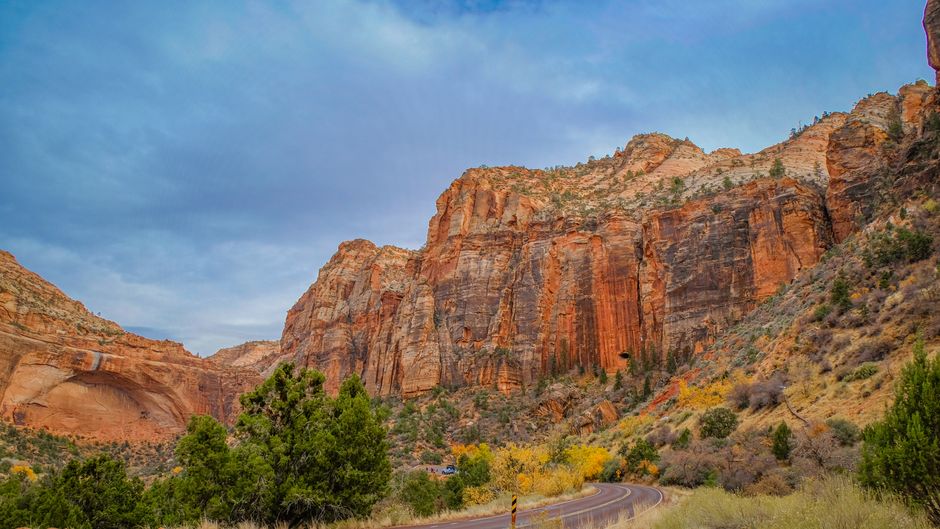
Yes. A May date does not guarantee access to a high road. Yosemite warns that Tioga Road and Glacier Point Road commonly stay closed until late May or early June, and a late snowstorm can change the estimate. Rocky Mountain’s Trail Ridge Road follows the same basic pattern. Check the park road page the morning before you drive and again before leaving your lodging. Do not rely on a map app showing a theoretically shorter route.
Should you cancel a hike because of rain or snow?
Not always, but you should change the objective. A light rain may make a waterfall walk better, while snowmelt can make stream crossings unsafe. Lightning, fast-rising water, ice on steep sections, and a trail that loses its surface under mud are firm reasons to turn around. Carry traction only when the park allows and conditions support it; spikes do not solve a flooded trail or a closed road.
The failure mode I see most often is treating a forecast as a single number. A 55-degree afternoon forecast says little about a shaded canyon, a 9,000-foot trailhead, or wind on an exposed rim. Read the hourly forecast, the elevation, and the park alert together. If those three pieces disagree, plan the lower and shorter option.
What Should You Reserve or Skip?
Reserve the scarce parts first
Reserve lodging, permits, and limited shuttle access before you reserve the rest of the trip. In May, the scarce item may be a campground, a popular hike permit, a ferry, or simply a room near the entrance. Check the official park site for the exact release schedule. Some reservations appear months ahead, while cancellations can open a useful midweek slot later.
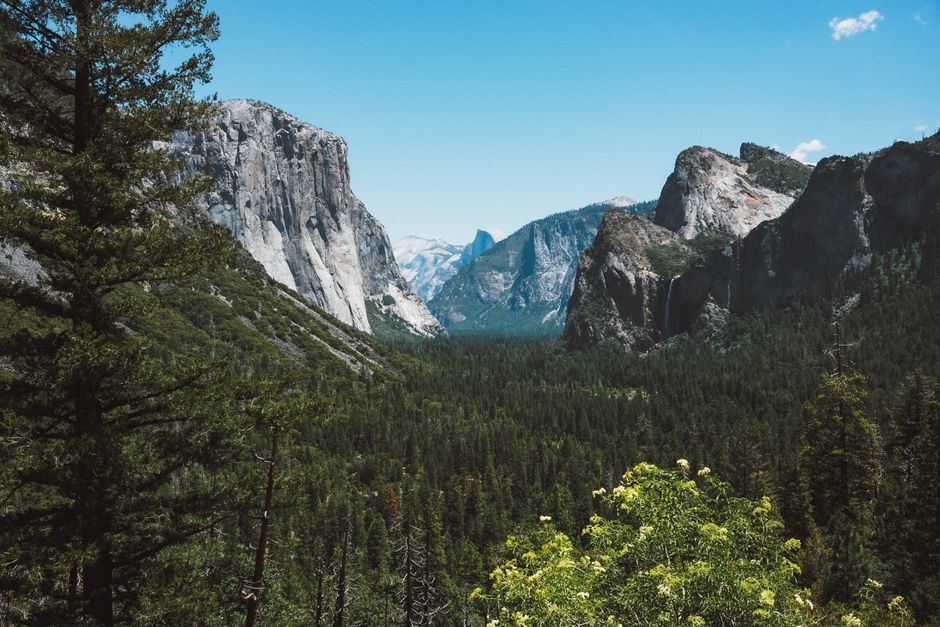
Skip any plan that requires three uncertain conditions to work at once. A high road must open, a trail must shed its snow, and a permit must line up with your arrival. Choose a lower route with a clear backup instead. At Zion, that could mean building the day around the Pa’rus Trail and canyon shuttle rather than assuming a strenuous route will be safe. At Yosemite, keep Valley walks ready even if the high-country roads remain closed.
Common mistakes that waste a May visit
- Driving in after breakfast and expecting parking at the most popular trailhead.
- Using a summer itinerary for a spring road network.
- Booking a nonrefundable hotel before checking seasonal closures.
- Assuming a national park pass covers camping, timed entry, shuttle reservations, or private concession fees.
- Planning a remote hike without water, offline maps, or a turnaround time.
- Ignoring Memorial Day weekend when comparing a quiet Tuesday with a busy Sunday.
For a first US national park May visit, choose Zion or the Grand Canyon South Rim, arrive Tuesday, sleep near the entrance, place the hardest activity before noon, and keep one full day flexible. That combination gives you the strongest odds of seeing the signature scenery without letting spring road closures control the entire trip.