Booked-out restaurants do not ruin a city break. They just force you to eat where locals often eat anyway: busy food markets with fast service, strong regional dishes, and enough choice to satisfy a group that cannot agree on one menu. The trick is knowing which markets work for lunch, when to arrive, and which attractive stalls are a waste of time.
The best food market is the one that solves lunch fast
For a last-minute lunch, choose a market with several food counters, indoor seating, and a location near your next stop. That combination matters more than a famous name. A market can have excellent food and still fail as a lunch plan if every stall has a 40-minute queue or if you have to stand outside in the rain.
Start with the lunch problem, not the market name
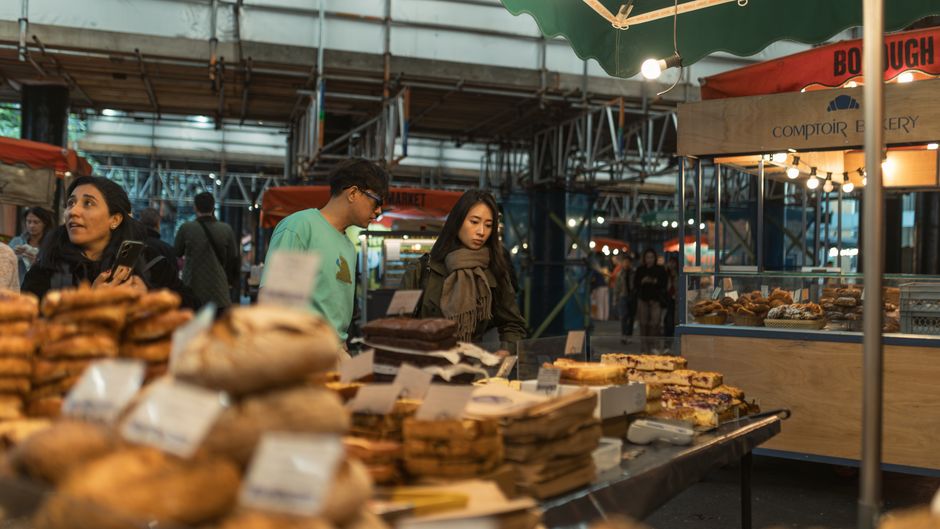
Ask three practical questions before walking across town. Can everyone find something they will eat? Can you get food within 20 minutes? Can the group sit down with bags, children, or tired feet? Mercado de San Miguel in Madrid is visually impressive and central, but it becomes cramped during peak lunch hours. Borough Market in London offers far more variety, yet it works best when you arrive early and accept that seating may be limited. Time Out Market Lisboa has a stronger setup for groups because the counters sit inside one large hall and shared tables make meeting up easier.
Use a two-stop plan
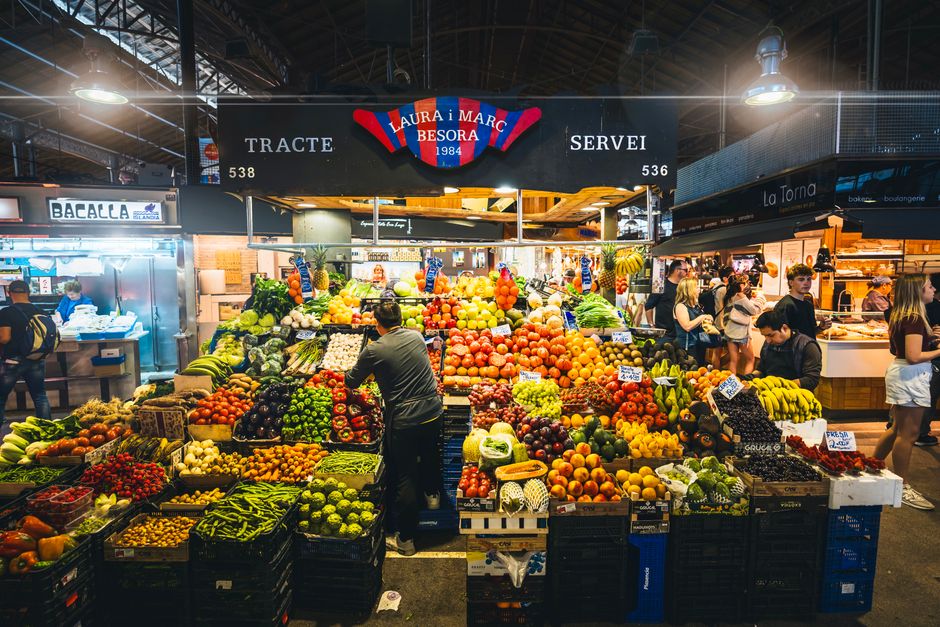
Pick one market for food and one nearby place for coffee, dessert, or a quiet break. This keeps lunch from carrying too much pressure. At Borough Market, you can eat near the market and walk toward the South Bank afterward. In Barcelona, La Boqueria works well as a quick tasting stop, followed by a proper sit-down break away from La Rambla. The clear verdict is simple: for a group with no reservation, choose convenience and choice over prestige. A famous market that creates a second transport problem is the wrong lunch market.
Which city food markets work best for a no-reservation lunch?
The table below separates markets that suit a quick meal from markets that are better for grazing. Times and prices vary by stall and season, but these figures give you a useful planning range for 2026.
| Market | City | Best arrival | Typical lunch spend | Best use |
|---|---|---|---|---|
| Borough Market | London | 11:00-11:45 | £12-£22 | Regional food and packed itineraries |
| Mercado de San Miguel | Madrid | 12:00-12:30 | €15-€30 | Small plates and casual grazing |
| Time Out Market Lisboa | Lisbon | 12:00-13:00 | €12-€25 | Groups with different tastes |
| La Boqueria | Barcelona | 10:30-11:30 | €8-€20 | Fast bites and market browsing |
| Mercato Centrale | Florence | 11:30-12:15 | €10-€24 | Indoor lunch near the historic centre |
Pick the market that matches your schedule
Florence visitors often choose Mercato Centrale because it sits close to major sights and offers indoor seating upstairs. That makes it a strong choice when the weather turns bad or a restaurant reservation falls through. La Boqueria is better for a short stop than a long relaxed lunch. You can buy fruit, seafood, tapas, and sweets, but the central aisles become unpleasantly crowded later in the day.
Do not confuse famous with useful
The best market for lunch is not always the market with the most social media attention. A market built mainly for evening drinks may have weak daytime seating. A produce market may close before your planned lunch. A market beside a major attraction may charge more and attract large tour groups. Use the table as a filter, then check the market’s opening hours and current stall list before leaving your hotel. For a no-reservation meal, Time Out Market Lisboa is the strongest all-round pick because it handles groups, variety, and bad weather better than most open-air markets.
Why market lunch feels easy until the queue starts
Food markets solve a basic travel problem: they reduce the coordination cost of feeding people with different appetites. In a traditional restaurant, one kitchen controls the pace, the menu, and the table. A market breaks those decisions apart. One person can eat soup, another can order grilled fish, and a third can choose a pastry. That flexibility is the category’s real value.
The hidden bottleneck is seating
Most visitors focus on the food queue and ignore the table queue. This causes the classic market failure: everyone buys lunch, then circles the building holding hot plates. Indoor halls such as Time Out Market Lisboa usually handle this better than narrow historic markets. Open-air markets often have benches, but those fill quickly and may not suit a group carrying shopping bags.
Before ordering, scan the edges of the market. Look for standing counters, upper floors, public benches, and nearby squares. If one person in the group has mobility limits, check the route between the entrance, counters, toilets, and seats. A market with stairs and scattered tables can turn a simple lunch into a tiring obstacle course.
The second bottleneck is payment
Some stalls accept cards, some prefer cash, and some use a shared payment system. Ask before ordering if the rules are unclear. Keep small notes or a working contactless card ready. At busy markets, fumbling with payment wastes more time than choosing the food.
The third bottleneck is portion math
Market portions range from a snack to a full meal. A single €6 plate may be perfect for grazing but not enough after a long morning of sightseeing. Plan one filling item per person, then add shared dishes only after everyone has eaten. This avoids the expensive mistake of ordering five small plates because they look generous in photographs.
My verdict: markets are best when you use their flexibility deliberately. They are not automatically faster than restaurants. They become faster when you treat the space like a food court with local character, not like a restaurant with no booking system.
Common food-market mistakes that waste a travel day
Most bad market lunches come from planning errors, not bad food.
- Arriving at peak time. You get the longest queues, the smallest choice of seats, and the loudest room. Shift lunch earlier or later by 45 minutes.
- Choosing a market across town. A highly rated market is not worth a 35-minute detour when your next museum, train, or tour starts soon. Add travel time to the lunch calculation.
- Assuming every stall is open. Some vendors close on specific weekdays, and some markets operate reduced hours outside the high season. Check the official schedule on the morning of your visit.
- Ordering before finding a table. This is the fastest route to cold food and irritated travellers. One person should secure a place first when the market is busy.
- Trusting a single review. A viral recommendation may describe a dish that was excellent at 10:00 and overwhelmed by 13:00. Look at recent comments for queue length, seating, and opening hours.
- Ignoring the weather. Open-air markets are poor choices during heavy rain or extreme heat. Pick an indoor hall, move lunch earlier, or use a nearby café as the backup.
- Expecting a bargain. Central tourist markets can cost as much as casual restaurants. Compare the final meal price, not the cheapest item displayed at the counter.
La Boqueria is a good example of the last mistake. It can deliver a quick and memorable bite, but its location and popularity mean the experience changes sharply as crowds build. Treat it as an early stop, not a guaranteed relaxed lunch.
When a food market is the wrong lunch choice
Skip the market when the group needs a quiet room, guaranteed seating, careful allergy handling, or a predictable arrival time. A restaurant reservation is still the better tool for a birthday meal, a work meeting, or a lunch before a fixed train. Markets create choice, but they also create noise, movement, and uncertainty.
Choose a bakery or deli for a faster meal
A good bakery can beat a crowded market for a solo traveller or couple. Buy a filled roll, pastry, fruit, and drink, then eat in a nearby square. This often costs less and takes under ten minutes. It lacks the grand market atmosphere, but it wins on speed and control.
Choose a specialist market for a stronger food experience
If everyone wants the same thing, a specialist market can be better than a large mixed hall. A seafood market, cheese hall, or regional produce market may offer deeper local character, even if it has fewer choices. The tradeoff is obvious: stronger focus, less flexibility.
Choose an evening market when lunch feels forced
Some markets are built for late afternoons and dinners. Visiting at noon may mean closed stalls, unfinished setup, or a flat atmosphere. Save the market for the evening and find a simple lunch nearby. This is especially sensible in cities where the main food culture starts late.
The final verdict is clear. For a booked-out restaurant and a hungry group, choose a market with many counters, nearby transport, and usable seating. Arrive early, walk the whole space, set a budget, and keep a nearby backup. Food markets will keep becoming a bigger part of city travel, but the best ones will be judged less by their photo appeal and more by how well they get real people fed.”