Is Puerto de Mogán actually worth a dedicated hiking trip, or is it better understood as a scenic coastal stop that happens to have trails nearby? After comparing it against Gran Canaria’s other hiking destinations, the answer is generally yes — but only if you know what you’re walking into.
Mogán is a municipality, not a single place. It covers approximately 184 square kilometers in Gran Canaria’s southwest corner, stretching from the port at Puerto de Mogán — the canals, bougainvillea, and fishing boats — to the inland village of Mogán sitting at around 300 meters elevation. The terrain between them is where the hiking is.
The Hiking Trails in Mogán Worth the Effort
The flagship route through the municipality is the PR-GC 50, a marked trail following the Barranco de Mogán from the coast to the village. At 10.5 kilometers one way with around 400 meters of elevation gain, it typically takes 3 to 4 hours walking at a steady pace. The Cabildo de Gran Canaria classifies it as moderate, and that rating generally holds — no technical scrambling, the path is well-signed, and the gradient builds gradually rather than hitting a steep section early.
What the rating doesn’t fully capture is the lack of shade in the lower third of the trail. The barranco opens wide near the coast, and from late morning to mid-afternoon the sun is direct and unrelenting. Plan this as a 7am start in summer; in winter it matters considerably less.
Walking the PR-GC 50: What to Actually Expect
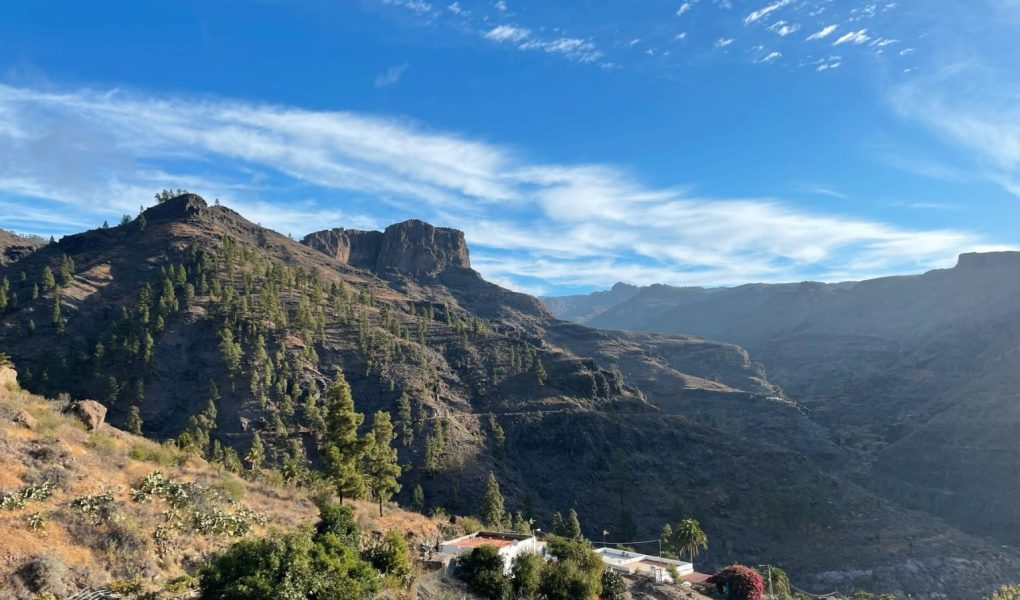
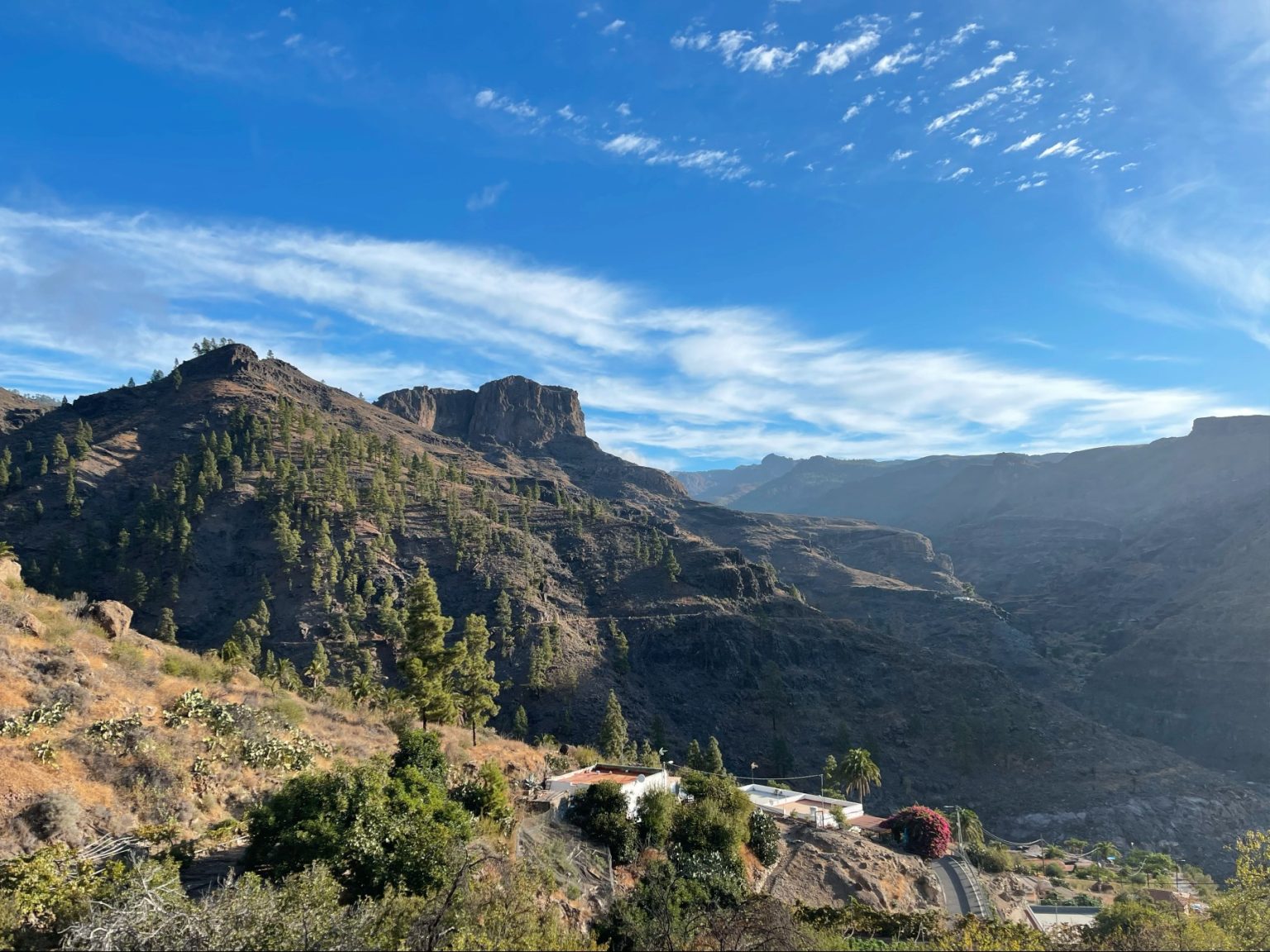
The first two kilometers out of Puerto de Mogán are flat and agricultural — banana plantations, irrigation channels, the occasional working farm. The trail changes character around kilometer 3, where the ravine narrows and the landscape turns drier and more dramatic. Stone terracing from older farming practices appears on the hillsides throughout this section. Abandoned cortijos, traditional farmhouses, dot the upper reaches.
Mogán village itself sits tight against the hill at the trail’s end: whitewashed houses with bright painted trim, a small central plaza, and a few functioning bars. It’s an actual working village, not a tourist reconstruction of one. Eat lunch here, then catch the bus back down. Global Bus line 84 connects Mogán village to Puerto de Mogán for approximately €1.30–€1.50, though the schedule is limited. Check the Global Bus app or their website before you go — this is not a route that runs every 30 minutes, and missing the last bus creates a genuine problem.
Montaña de Tauro: The Shorter Option with Better Views
The ridge trail toward Montaña de Tauro, accessible from the upper residential streets above Puerto de Mogán, covers roughly 3 kilometers round trip with around 200 meters of elevation gain. It’s shorter than the barranco walk by a significant margin, but the coastal panoramas are considerably more dramatic. From the ridgeline, the port sits below with the Atlantic beyond it, and on clear days you can see east toward Maspalomas.
This trail is rougher underfoot than the PR-GC 50. Volcanic soil, loose rock in sections, and a gradient that’s steeper than it appears from below. Sturdy footwear is practical here, not precautionary. In wet conditions — uncommon but not unheard of between November and February — the surface becomes slippery enough to warrant real caution on the descent.
Trail Comparison at a Glance
| Trail | Distance | Elevation Gain | Difficulty | Duration | Best Months |
|---|---|---|---|---|---|
| PR-GC 50 (Barranco de Mogán) | 10.5 km one way | ~400 m | Moderate | 3–4 hours one way | October–April |
| Montaña de Tauro Ridge | ~3 km round trip | ~200 m | Easy-Moderate | 1.5–2 hours | October–May |
| Puerto de Mogán Coastal Walk | ~2 km | Minimal | Easy | 45 minutes | Year-round |
Getting to Mogán: Your Practical Options
Most visitors to Gran Canaria stay in the southern resort strip — Maspalomas, Playa del Inglés, Meloneras — which makes Puerto de Mogán a reasonably accessible day trip. From Las Palmas in the north, it’s a longer commitment.
- By bus from Maspalomas or Playa del Inglés: Global Bus line 1 runs regularly along the southern coast and terminates at Puerto de Mogán. Fare is typically €3–€4 one way. Journey time is around 40–50 minutes depending on stops. This is the simplest and cheapest approach for anyone without a rental car.
- By car from the GC-1 motorway: Exit at Arguineguín and follow the GC-500 coastal road west. The drive from Maspalomas takes about 25–35 minutes. Parking near the port is available but tight on Friday mornings during the weekly market.
- By ferry from Puerto Rico: Líneas Romero operates a small passenger ferry between Puerto Rico and Puerto de Mogán. Journey time is roughly 25 minutes, and fares run around €10 one way. The ferry runs daily, but check current schedules directly with the operator — service frequency varies by season and timetables are updated regularly.
- From Las Palmas de Gran Canaria: Global Bus line 32 runs from the capital south to Puerto de Mogán, but total journey time typically exceeds 2 hours. For a single hiking day, most travelers from Las Palmas find it more practical to drive the GC-1 south and park at the port.
For the PR-GC 50 specifically, the most efficient approach is bus to Puerto de Mogán, walk the trail up to the village, and return by local bus. This avoids any car logistics at either end and lets you focus on the walk rather than shuttle arrangements.
When to Go: The Short Answer
October through April is the window. Summer temperatures in the barranco regularly exceed 30°C with minimal shade on exposed sections, making midday hiking not just unpleasant but a genuine heat risk. The trails don’t close in summer — but the conditions typically don’t justify the exposure without very early starts before 7am.
What to Do in Mogán When You’re Not Hiking
The port earns its reputation independently of the trails. Puerto de Mogán’s canals, flower-covered footbridges, and harbor architecture are genuinely appealing in a way that holds up on arrival — not just in photographs. The “Little Venice” comparison is loose (it’s a fishing port with decorative waterways, not a city on water), but the atmosphere is legitimately pleasant and noticeably calmer than the resort strip to the east.
The Friday Market
Every Friday morning from approximately 8am to 2pm, Puerto de Mogán hosts a weekly market along the harbor. Stalls sell produce, local crafts, textiles, jewelry, and the usual tourist goods. It draws substantial crowds by midmorning. Arriving before 9am typically means you can move through without much jostling; arriving at 11am means navigating through organized tour groups from the south coast resorts.
Snorkeling and the Beach
Playa de Mogán, the sheltered beach adjacent to the port, is calmer and cleaner than most of the south coast strip. Water clarity is consistently good. A small reef structure near the breakwater supports marine life worth snorkeling over — sergeant major fish, small wrasse, occasional octopus sightings. Sunbeds are available for hire; this is not a remote wilderness beach. But compared to the resort beaches at Maspalomas, it’s noticeably less hectic and considerably more attractive.
Whale and Dolphin Watching
Several operators run cetacean watching trips from the port. Gran Canaria sits on a year-round migration corridor used by bottlenose dolphins and short-finned pilot whales, with occasional sightings of sperm whales and loggerhead sea turtles. Whale Watch Gran Canaria and similar operators typically run 2–3 hour tours at around €35–€45 per adult. These are wildlife watching excursions — sightings are common but not guaranteed, and any operator claiming certainty is overstating their case considerably.
Where to Eat in Puerto de Mogán
Is the food at the waterfront worth the prices?
Generally, no — not at the tables directly facing the marina. Those restaurants charge for the view, and the food typically doesn’t match the bill. The experience is pleasant if you’re after a long lunch in a scenic setting and know what you’re paying for going in.
Which specific restaurants are reliable?
Restaurante El Faro, located near the port, has operated for years and maintains a consistent reputation for fresh local fish. The menu focuses on what’s been caught locally — vieja (parrotfish), sama (red snapper), and cherne (grouper) appear regularly depending on the day’s catch. Main courses run €15–€25. Weekends are busy enough that a reservation is worth making a day ahead.
For cheaper, more local eating: the streets one block back from the waterfront have tapas bars and smaller restaurants charging closer to village prices. Papas arrugadas — wrinkled potatoes served with mojo rojo or mojo verde — are the standard opener and typically cost €4–€6. The dish is the same as anywhere on the islands; the price difference reflects the address.
What about eating in Mogán village after the hike?
The village has a handful of small bars and restaurants around its central plaza, and they tend to be noticeably cheaper than anything in the port. If you walk the full PR-GC 50, eating in the village before catching the bus down is both the practical choice and generally the better-value meal of the two options.
Five Mistakes Hikers Make in the Mogán Area
- Starting from the village end. Walking downhill from Mogán to Puerto de Mogán sounds easier, but it creates a logistical headache — you need to reach the village first by bus before starting, and you arrive at the port with no transport back unless you prearranged it. Most experienced walkers do the PR-GC 50 uphill from the port for a clear reason.
- Underestimating water needs. There are no water sources on the PR-GC 50 route. Bring a minimum of 2 liters per person for the full trail. In shoulder season months like October and November, air temperature in the ravine floor can still reach 27–28°C during midday, and the walk is 3 to 4 hours one way.
- Conflating Puerto de Mogán with Mogán village. These are two distinct places separated by 10 kilometers of trail and approximately 20 minutes by road. Entering “Mogán” into a GPS without specifying which end sends you to different destinations depending on the mapping app. Confirm your endpoint before booking transport.
- Expecting technical hiking. The trails here are rewarding in terms of scenery and cultural character, but they are not technically demanding by Gran Canaria’s standards. If exposed ridgelines, significant elevation, or challenging terrain is the goal, the central highlands — specifically the Roque Nublo area at 1,813 meters and the Tejeda caldera — offer considerably more difficult and satisfying options.
- Visiting in July or August specifically for hiking. The trails remain open, but conditions are not suited to midday walking. If a summer visit is unavoidable, Montaña de Tauro very early in the morning remains manageable. The full PR-GC 50 in summer midday is generally inadvisable without solid heat acclimatization and a very early start.
Mogán vs. Other Gran Canaria Hiking Bases
Mogán occupies a specific niche in Gran Canaria’s hiking landscape: accessible from the south coast resorts, combining trail access with coastal amenities, and suited to moderate-fitness walkers rather than dedicated trekkers. It’s a practical compromise rather than a specialist destination — and knowing that going in sets reasonable expectations.
| Base | Best For | Trail Difficulty | Resort Amenities Nearby | Crowd Level on Trails |
|---|---|---|---|---|
| Puerto de Mogán | Barranco walks, coastal access | Easy–Moderate | High | Medium |
| Tejeda (central highlands) | Roque Nublo, summit ridges | Moderate–Hard | Very Low | Low |
| Maspalomas | Dunes, flat coastal paths | Easy | Very High | High |
| Agaete (northwest) | Coastal cliffs, pine forest | Moderate–Hard | Low | Low |
| Cruz de Tejeda (central) | Long-distance GR-131 sections | Moderate–Hard | Very Low | Very Low |
For travelers mixing a hiking day with beach days, or traveling with people who don’t hike, Mogán is the practical choice in Gran Canaria’s south. For those whose primary reason for the trip is trail quality and physical challenge, Tejeda or the northwest coast will generally deliver more per hour of effort. The two goals don’t have to conflict — they just rarely share a single base.
Walk the Barranco de Mogán end to end at least once; everything else in the area is optional from there.