
Most travelers assume a travel adapter is all they need. They plug a US hair dryer into a London hotel socket with a $12 adapter and hear a loud pop. The adapter didn’t fail. It did exactly what it was designed to do — change the plug shape. It never promised to change the voltage.
This article explains the difference between a plug adapter and a voltage converter, how to read your device’s input label, and why USB-C PD chargers have quietly made half of this problem disappear. If you travel to Europe, Asia, or Africa in 2026, this is the one electrical lesson that saves you from buying a new laptop charger in a foreign country.
The Adapter vs. Converter Confusion That Causes the Damage
A plug adapter is a dumb piece of metal and plastic. It takes a US Type A or Type B prong and reshapes it to fit a UK Type G socket, a European Type C socket, or an Australian Type I socket. Nothing else. The voltage coming out of the wall stays whatever the country supplies — 230V in the UK, 230V in most of Europe, 220V in much of Asia and Africa.
A voltage converter is a transformer. It actually steps 220-240V down to 110-120V so a US-only device can run safely. These are heavy, expensive, and increasingly unnecessary because most modern electronics are dual-voltage.
How to Read Your Device’s Input Label in 10 Seconds
Flip over your laptop charger, phone charger, hair straightener, or CPAP machine. Look for the input line. You want to see something like this:
- Input: 100-240V~ 50/60Hz — Safe to use almost anywhere with just a plug adapter.
- Input: 120V~ 60Hz — US only. Needs a voltage converter or don’t bring it.
Apple MacBook chargers, Anker GaN chargers, Sony camera battery chargers, and most phone chargers from the last decade are all 100-240V. Hair dryers, curling irons, electric shavers, and some kitchen appliances are frequently 120V only. The label never lies. Read it before you pack.
The Devices Most Likely to Die at 220V
| Device | Typical Input | Risk at 220V Without Converter | What to Do |
|---|---|---|---|
| iPhone / Android phone | 100-240V | None | Use USB-C PD charger with plug adapter |
| MacBook / Dell / Lenovo laptop | 100-240V | None | Plug adapter only |
| Dyson Airwrap / hair dryer | 120V only (US models) | High — will burn out | Buy dual-voltage travel version or leave home |
| CPAP machine (ResMed AirSense 10) | 100-240V (most models) | Low | Check label; most are dual-voltage |
| Electric toothbrush (Oral-B / Sonicare) | 100-240V (newer) / 120V (older) | Medium | Check label; older chargers may fail |
| Electric kettle / clothes steamer | 120V only | High | Do not bring; buy at destination |
The pattern is simple: battery-powered devices with external chargers are almost always dual-voltage. Heating-element devices are the danger zone. A $20 hair dryer from Target is not worth the suitcase space or the risk.
USB-C PD Is Quietly Solving the Multi-Voltage Problem

Here’s the good news for 2026 travelers: USB-C Power Delivery chargers have become the universal travel companion. A single 65W GaN charger like the Anker 735 Charger ($55) or the Ugreen Nexode 65W ($40) accepts 100-240V input and outputs USB-C PD to charge a laptop, phone, earbuds, and Kindle simultaneously. No voltage converter needed. No per-country charger needed.
This matters because it eliminates the single biggest travel adapter mistake: bringing a US power strip and plugging it into a converter. Instead, you carry one GaN charger with interchangeable plug adapters or a universal travel adapter with built-in USB-C PD ports.
What to Look for in a USB-C PD Travel Charger
- 65W minimum if you charge a laptop. 30W is fine for phones and tablets only.
- GaN (gallium nitride) technology — smaller and runs cooler than older silicon chargers.
- At least 2 USB-C ports and 1 USB-A port for older accessories.
- Interchangeable plug heads (US, UK, EU, AU) or a separate universal adapter that accepts Type A, C, G, and I plugs.
The Epicka Universal Travel Adapter ($23) and the Ceptics World Travel Adapter Kit ($20) both include multiple plug types and USB-C PD ports. They handle the plug shape problem while your GaN charger handles the voltage problem. Together, they cover 95% of travel scenarios.
The One Thing That Still Needs a Voltage Converter in 2026
Heating devices. That’s the short answer.
If you absolutely must bring a US hair dryer, straightener, or clothes steamer to a 220V country, you need a step-down voltage converter rated for the device’s wattage. A 1875W hair dryer needs a converter rated for at least 2000W, which costs $35-50 and weighs 3-4 pounds. The Bestek 2000W Travel Voltage Converter ($38) is the most common option, but it’s bulky and still can’t handle devices over 2000W.
My honest recommendation: don’t bring heating devices. Buy a cheap hair dryer at your destination for $15-20. Hotels in most countries provide hair dryers. For straighteners, buy a dual-voltage travel model like the BaBylissPRO Nano Titanium Mini ($35) which explicitly lists 100-240V input. The converter route is a last resort for medical devices or specialty equipment, not a convenience for beauty tools.
Country-by-Country Plug and Voltage Cheat Sheet
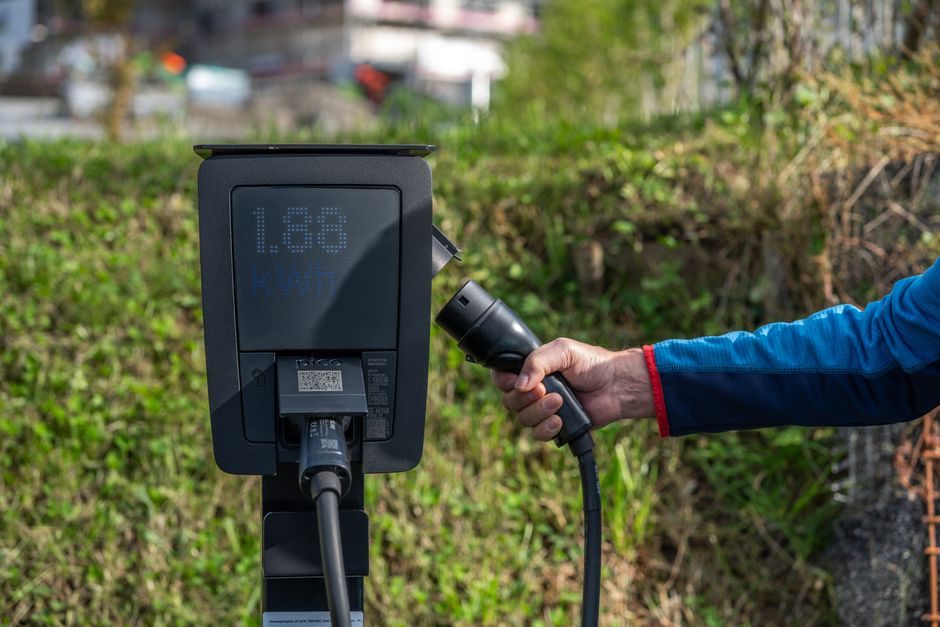
You don’t need to memorize 195 countries. You need to know the four plug patterns that cover most of the world:
- Type A/B (US, Canada, Mexico, Japan): 100-120V. No adapter needed for US travelers.
- Type C/E/F (Europe, South Korea, most of Africa): 220-230V. Round two-pin plug.
- Type G (UK, Ireland, Singapore, Hong Kong, UAE, Malaysia): 230V. Three rectangular prongs.
- Type I (Australia, New Zealand, China, Argentina): 220-230V. Two angled flat prongs.
Japan runs at 100V, which is slightly lower than the US 120V. Most US devices work fine in Japan. The reverse is not always true — Japanese devices may run hot on US voltage. Brazil and South Africa use unique plugs (Type N and Type M respectively), but most universal adapters include them.
Quick Reference: What to Pack by Region
- Europe trip: Type C adapter + 65W GaN charger. No converter needed for electronics.
- UK trip: Type G adapter + 65W GaN charger. Same as above.
- Multi-country Asia trip (Thailand, Vietnam, Japan): Universal adapter with Type A, C, G, I heads. Japan uses Type A, Thailand uses Type A/B/C, Vietnam uses Type A/C.
- Africa trip (South Africa, Kenya, Morocco): Type M (South Africa), Type G (Kenya), Type C/E (Morocco). A universal adapter covers all three.
How to Check Your Current Adapter Before You Fly
Pull out the adapter you already own. Look at the back. Does it say “plug adapter” or does it list a wattage rating and input voltage? If it only says “plug adapter,” it does not convert voltage. Period.
Next, look at the USB ports. If it has USB-C with “PD” and a wattage like 20W, 30W, or 65W printed on it, that USB port will charge modern devices safely because the USB-C standard negotiates voltage automatically. The AC socket on the same adapter is still just a pass-through — it does not convert voltage for whatever you plug into it.
The failure mode I see most often: travelers buy a “universal adapter with USB ports” and assume the USB ports make the whole device safe for 220V. Then they plug a 120V-only hair straightener into the AC socket. The USB ports were safe. The AC socket was not. The straightener dies.
For CPAP users: the ResMed AirSense 10 and AirSense 11 power supplies are both 100-240V. You need only a plug adapter. But check your specific model’s power brick before you trust this — older machines or aftermarket power supplies may not be dual-voltage.
What Actually Matters in a 2026 Travel Adapter Purchase
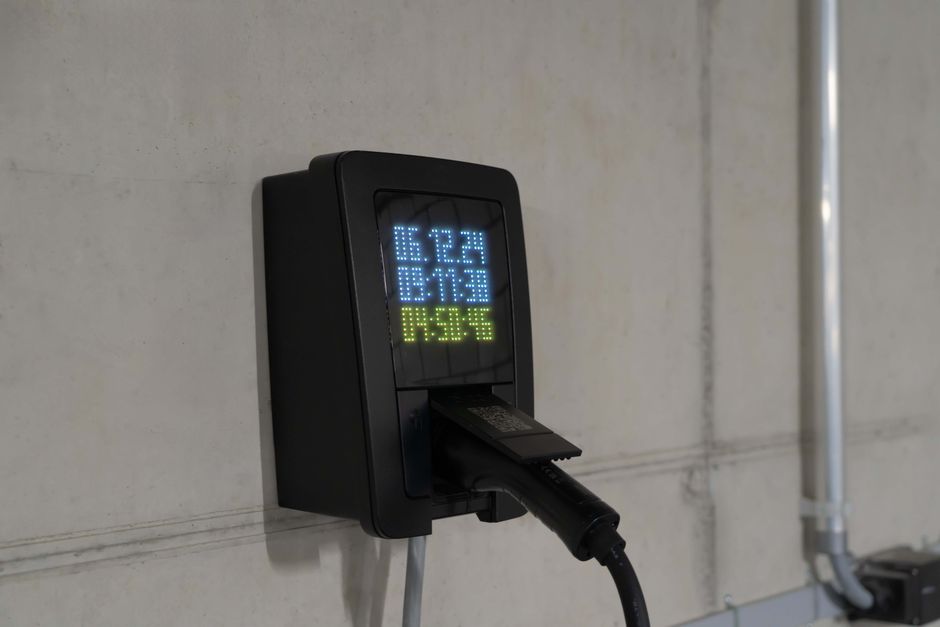
If you’re buying a new travel adapter this year, the decision has gotten simpler. The best all-purpose option for most travelers is a universal adapter with built-in USB-C PD. The Epicka Universal Travel Adapter ($23) covers Type A, C, G, and I plugs, includes 3 USB-C ports and 2 USB-A ports, and handles up to 65W PD output. It does not convert voltage for the AC socket, but it doesn’t need to — your electronics are dual-voltage.
If you travel with a laptop and need to charge it from a wall socket, pair that adapter with a 65W GaN charger. The Anker 735 ($55) or Ugreen Nexode 65W ($40) are both smaller than a deck of cards and handle 100-240V input natively. This two-piece kit — universal adapter + GaN charger — weighs under 8 ounces total and replaces every charger you previously packed.
Skip the voltage converter unless you have a specific 120V-only device you cannot replace. For most people, that device doesn’t exist in 2026. Your phone, laptop, tablet, earbuds, camera, and CPAP machine are all dual-voltage. The heating tools are better left at home or bought at your destination.
The travel adapter market has shifted from “which plug shape do I need” to “which USB-C PD wattage do I need.” That’s a better problem to have. It means fewer fried devices, lighter luggage, and one less thing to worry about when you land in a country where the wall socket looks nothing like home.