The claim that Cape Town is “one of Africa’s most vegan-friendly cities” gets repeated in every travel roundup. It is, technically, accurate. But it creates a false expectation — that any restaurant you walk into will serve you well. It won’t. Cape Town has a genuinely strong plant-based dining scene, concentrated in specific neighbourhoods, built around a handful of dedicated restaurants, and almost completely absent in others. This guide maps the real picture: specific places, real prices, and a clear warning about the restaurants that use the “vegan-friendly” label without earning it.
Cape Town’s Vegan Scene Is More Geographically Concentrated Than Guides Suggest
Most visitors assume the whole city is equally set up for plant-based eating. It isn’t. Strong options cluster in the City Bowl, Gardens, Sea Point, and parts of Woodstock. Everything else — tourist areas like the V&A Waterfront, suburban malls, beachside restaurants in Camps Bay — is genuinely thin on meaningful vegan options.
Understanding this geography saves you bad meals. If you’re staying in Green Point, you’re a 10-minute drive from the best restaurants. If you’re staying in Camps Bay, the views are excellent and the plant-based menu options are not.
Why the V&A Waterfront Disappoints Every Time
The V&A Waterfront is Cape Town’s most visited dining area and its weakest for vegan food. The restaurants there are built for high-turnover tourist trade — steakhouses, seafood joints, and international chains. Most can modify a pasta or offer a modified salad, and that is the full extent of their commitment. Plan to use the Waterfront for one thing: picking up groceries. For actual meals, eat elsewhere.
The City Bowl and Gardens Area: Where the Real Options Are
Kloof Street, Bree Street, and the surrounding blocks in the City Bowl and Gardens area contain the highest density of serious vegan restaurants in Cape Town. Multiple dedicated vegan spots and vegan-forward cafés sit within walking distance of each other. If you’re choosing accommodation and plant-based dining matters to you, staying somewhere central to this area is the single most practical decision you can make. De Waterkant, just north of the City Bowl, adds a few more upscale options. Sea Point runs a close third, with a strong concentration of health-oriented cafés along its main road.
The Best Fully Vegan Restaurants in Cape Town
There is a meaningful difference between a restaurant that is fully vegan and one that merely “accommodates” vegans. In a fully vegan kitchen, there is no cross-contamination risk, the staff understand every dish because they have to, and plant-based food is the actual business — not a reluctant addition to the menu. These are the Cape Town restaurants where plant-based cooking is the primary commitment.
Lekker Vegan — The Best Value in the City
Lekker Vegan makes the argument that vegan fast food doesn’t need to be a compromise or a premium price point. The menu centres on burgers, hot dogs, and loaded fries. The Double Stack burger runs R120–140 (approximately $7 USD), which is competitive with non-vegan fast-casual spots. The Beyond Meat patties are cooked correctly — proper crust, not steamed through — which matters more than most people realise when judging plant-based burgers.
Two branches exist: one on Kloof Street in Gardens, one in Woodstock. Both are consistent. The Gardens branch handles a heavier weekday lunch crowd. The Woodstock location is better if you’re combining it with a Saturday at the Neighbourgoods Market — they’re five minutes apart on foot. Seating at both is limited; takeaway is often the smarter choice.
Bottom Line: Lekker Vegan is the first recommendation for any vegan visitor to Cape Town, at any budget. Nothing else in the city delivers the same satisfaction-per-rand ratio.
Scheckter’s RAW — The Restaurant Worth Planning Around
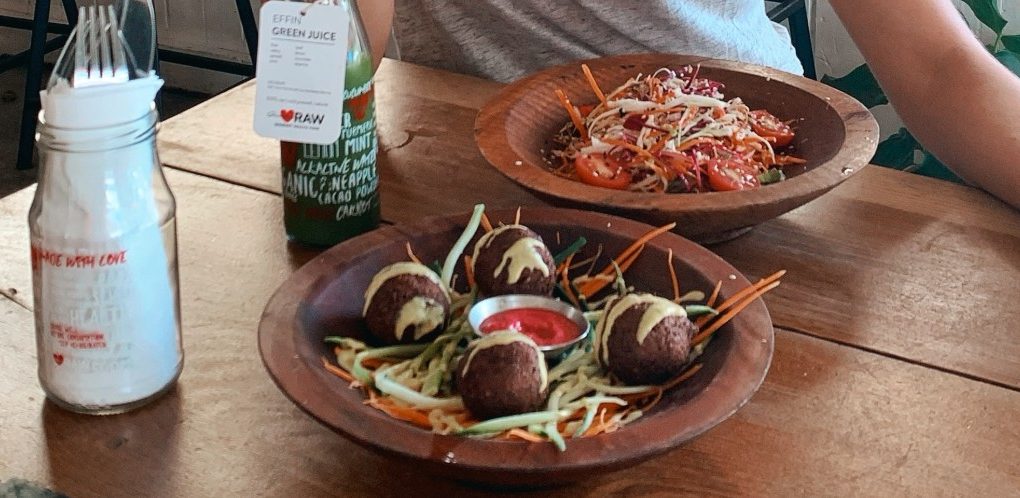
Scheckter’s RAW in De Waterkant is a fully raw vegan restaurant. Mains are priced at R180–260 (approximately $10–15 USD), placing it in the mid-range bracket for Cape Town dining. The food is technically impressive: cashew-based sauces, raw pasta made from vegetable strips, desserts built from dates, cacao, and nut bases that genuinely compete with cooked alternatives.
The menu runs to around 8–10 mains at any given time. Small menus in specialist kitchens usually signal consistency rather than limitation — and that holds here. The raw lasagne and the cashew cheese sharing boards are the standout dishes. Portions are moderate. Book ahead on Friday and Saturday evenings; walk-in availability is unpredictable on weekends.
Other Solid Options in the City
Superfoods Café on Kloof Street runs all-day from breakfast through late afternoon. It isn’t a destination restaurant, but it’s extremely useful — a broad menu of smoothie bowls, Buddha bowls, grain bowls, and cooked options that means you can always find something regardless of how hungry you are. Mains run R80–180. Consistent if not groundbreaking.
Honest Chocolate Café is worth a detour even though it isn’t a vegan restaurant. Most of their bean-to-bar chocolate products and drinks can be made plant-based, and the quality is legitimately exceptional. An oat milk hot chocolate using their single-origin cacao runs R65–80. Worth an afternoon stop on its own merits.
For Indian-influenced plant-based food, several restaurants in the Bo-Kaap neighbourhood serve dishes that are naturally vegan or easily modified. Cape Malay cuisine in this area happens to align well with plant-based eating — lentil dishes, vegetable curries, pickled vegetables — even when the restaurants don’t market themselves as vegan-friendly.
Cape Town Vegan Dining by Neighbourhood — Quick Reference
This table covers the most practically useful areas for visitors. Price ranges reflect a main course per person.
| Neighbourhood | Best Vegan Option | Main Course (ZAR) | Best For | Worth the Trip? |
|---|---|---|---|---|
| Gardens / Kloof Street | Lekker Vegan, Superfoods Café | R80–R160 | Everyday meals, all-day dining | Yes — base yourself here |
| De Waterkant | Scheckter’s RAW | R180–R260 | Special occasion, raw cuisine | Yes — book ahead |
| Sea Point (Main Road) | Kauai, independent cafés | R90–R180 | Breakfast, quick lunches | Yes for Sea Point stays |
| Woodstock | Neighbourgoods Market (Sat), Lekker Vegan | R50–R130 | Weekend market eating, budget meals | Yes — Saturdays specifically |
| Bo-Kaap | Cape Malay curry restaurants | R100–R180 | Cultural dining, naturally vegan dishes | Yes — underrated option |
| V&A Waterfront | Woolworths Food (groceries only) | R40–R100 supermarket | Grocery shopping — not dining | No for restaurants; yes for groceries |
| Camps Bay | Modified dishes at most restaurants | R200–R350 | Nothing specific — avoid for vegan dining | No |
Kauai is a South African health-food chain — not fully vegan, but roughly 60% of their menu is plant-based or easily modified. It is a reliable fallback in areas where specialist options don’t exist, particularly in Sea Point and Cape Town CBD.
The “Vegan-Friendly” Label Means Almost Nothing
Any restaurant can claim to be vegan-friendly. It requires no menu changes, no staff training, and no actual commitment. Before trusting the label at any place not on the list above, pull up their online menu and count the standalone vegan mains — not salads, not sides, not dishes where you can ask to remove the chicken. Fewer than four dedicated vegan mains? You are the afterthought on that menu.
Bottom Line: Treat “vegan-friendly” as a claim that requires verification, not a credential.
Markets and Supermarkets: The Overlooked Half of Vegan Eating in Cape Town
Eating every meal at a restaurant is rarely the best strategy in Cape Town — both for budget and variety. The markets and supermarkets here are genuinely strong, and building at least one market meal or self-catered meal into each day makes the whole trip easier without sacrificing quality.
- Oranjezicht City Farm Market (OZCF) — Granger Bay, Saturdays 08:00–13:00. Multiple dedicated vegan vendors, fresh produce from local farms, baked goods, and prepared hot food. Budget R100–150 for a full breakfast or brunch spread. One of the best Saturday morning activities in Cape Town regardless of diet.
- Neighbourgoods Market — Old Biscuit Mill, Woodstock, Saturdays 09:00–14:00. More street-food energy, louder crowd, younger atmosphere. At least five dedicated vegan stalls on any given Saturday — Asian-influenced wraps, raw cakes, loaded grain bowls. Expect to spend R60–120 for a proper plate.
- Woolworths Food — South Africa’s Woolworths is a premium supermarket with no relation to the UK clothing brand. Their Plant private-label range covers vegan sausages, burgers, dairy-free yoghurt, oat milk, and ready meals. Most major branches stock it consistently. Essential for self-catering breakfast and lunch supplies.
- Pick n Pay — Larger branches carry the Fry’s Family Food range (a South African vegan meat-alternative brand) alongside a growing plant-based dairy section. Cheaper than Woolworths, slightly less curated, but solid for staples and daily shopping.
- Wellness Warehouse — Specialty health food chain with branches on Kloof Street, Sea Point, and elsewhere. Best for niche items: nutritional yeast, raw protein bars, specialty flours, imported dairy-free cheeses. Prices are high — this is a top-up store, not a daily shop.
For trips of three days or longer, buying breakfast supplies from Woolworths and reserving restaurant meals for dinner only cuts the daily food spend substantially without any real compromise on quality or experience.
What Vegan Eating in Cape Town Actually Costs Per Day
Cape Town is one of the more affordable cities for plant-based food — more so than comparable destinations like London, Sydney, or Johannesburg. The cost advantage disappears if you eat every meal at a restaurant and order specialty add-ons at every turn, but for a realistic day of eating, the numbers are genuinely reasonable.
| Budget Level | Breakfast | Lunch | Dinner | Est. Daily Total (ZAR) | Est. Daily Total (USD) |
|---|---|---|---|---|---|
| Budget | Woolworths self-cater (R35) | Lekker Vegan Double Stack (R130) | Superfoods Café main (R130) | ~R295 | ~$17 |
| Mid-range | Café breakfast + oat flat white (R120) | Kauai bowl or market plate (R130) | Scheckter’s RAW main (R230) | ~R480 | ~$27 |
| Splurge | Hotel café or upscale spot (R180) | Sit-down lunch with drinks (R250) | Fine dining, plant-based tasting menu (R500+) | ~R930+ | ~$53+ |
Exchange rate reference: approximately R17.5 per USD as of early 2026. This shifts — check the current rate before you travel.
Two cost traps worth naming specifically. First: oat milk surcharges. Many Cape Town cafés charge R20–35 extra for oat or almond milk. Common enough that it’s worth budgeting for if you drink coffee regularly. Second: specialty vegan add-ons at non-vegan restaurants — cashew cheese, plant-based butter, vegan pizza cheese — are frequently priced as premium extras at R35–60 on top of the base dish. At a dedicated vegan restaurant, these are just ingredients. At a mainstream restaurant trying to accommodate you, they are a margin opportunity.
The original concern — whether Cape Town actually delivers on its vegan-friendly reputation — has a clear answer. Yes. But only if you eat in the right places. Lekker Vegan handles everyday meals at honest prices. Scheckter’s RAW handles the sit-down occasions. The Saturday markets handle variety and spontaneity. And Woolworths handles everything in between. Stick to those, skip the restaurants that use the label without backing it up, and Cape Town will feed you well every day you’re there.
This guide is based on personal research and published pricing. Restaurant hours, menus, and prices change — verify directly before visiting.