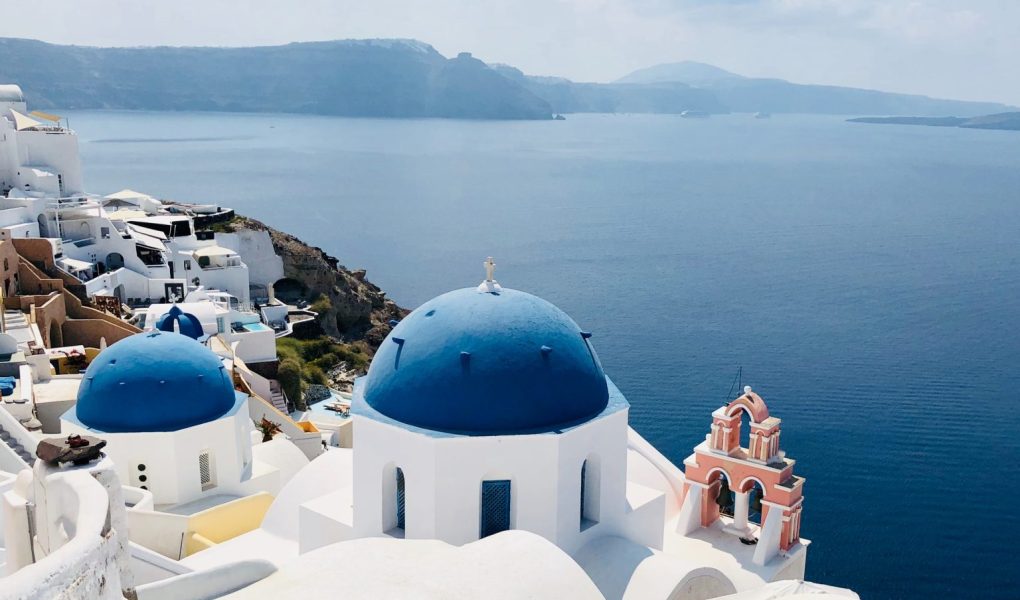
The most expensive mistake tourists make in Santorini isn’t overpaying for a hotel — it’s spending four days in Oia and leaving thinking they’ve seen the island. Santorini is not a single famous village with blue domes. It’s a crescent-shaped volcanic caldera with distinct neighborhoods, beaches in three different colors, a buried Bronze Age city older than Pompeii, and wineries growing grapes in a way found nowhere else on earth.
This guide gives you the actual numbers, real venue names, and a ranked breakdown of what’s worth your time — and what isn’t.
Why Most Santorini Trips Underdeliver
Here’s the pattern: tourists book a caldera-view hotel in Oia, arrive exhausted, spend day one fighting crowds for sunset photos, eat at an overpriced restaurant with mediocre food, and repeat. They leave having spent €2,000+ per couple and seen roughly 15% of the island.
Santorini is only 18km long. You can cover it properly in four days. The problem isn’t the island — it’s that nobody told them Oia’s famous sunset spot (the castle ruins at the northwestern tip) draws 2,000+ people every evening in July and August, requiring a 90-minute early arrival for a clear sightline. The view from Imerovigli — the village perched highest on the caldera rim, 3km south of Oia — is equally dramatic with a fraction of the crowd. That single data point changes the whole itinerary.
Where to Stay: Village-by-Village Breakdown
Your hotel location determines your entire experience. Each village has a distinct character. Picking the wrong one based on price alone is one of the most common planning errors.
| Village | Best For | Avg. Caldera Hotel Rate (Peak) | Crowd Level | Key Access Point |
|---|---|---|---|---|
| Oia | Romance, photography, luxury | €350–€900/night | Very High | Sunset castle: 5-min walk |
| Imerovigli | Views without crowds, quiet stays | €200–€500/night | Low–Medium | Caldera path: direct |
| Fira | Nightlife, central transport hub | €120–€350/night | High | Cable car to port: 3 min |
| Firostefani | Caldera views, quieter than Fira | €180–€450/night | Medium | 15-min walk to Fira center |
| Perissa / Perivolos | Beach access, families, budget | €80–€200/night | Low–Medium | Black sand beach: immediate |
Best Luxury Option: Canaves Oia Epitome
Canaves Oia Epitome is the clearest answer for caldera luxury in Oia. Suites start around €800/night in peak season but include private plunge pools and direct caldera views from every room. The infinity pool is among the best on the island. Book 3–4 months ahead for July and August — they sell out reliably by April.
Best Value for Caldera Views: Imerovigli
For caldera views without Oia’s price premium or pedestrian traffic, Imerovigli is the stronger choice. Astra Suites delivers comparable views at €200–€280/night, with a 15-minute walk along the caldera path connecting to Oia’s access points. The village has two restaurants, minimal souvenir shops, and a genuinely peaceful atmosphere even in August.
The Experiences That Actually Deliver
Skip the generic checklist. Here’s what actually justifies its time slot and what doesn’t make the cut.
Akrotiri Archaeological Site: Go First
Akrotiri is a Bronze Age city buried under volcanic ash around 1600 BCE — Santorini’s answer to Pompeii, except the preservation in certain respects is superior and the site predates the Roman eruption by over a thousand years. Multi-story buildings, intact drainage systems, and detailed frescoes (replicas on-site; originals at the National Archaeological Museum in Athens) fill a covered excavation area you walk through at ground level. Entrance costs €12. The site opens at 8am and the covered structure keeps it bearable in summer heat. Plan 90 minutes. It’s at the southwestern tip of the island, about 20 minutes by ATV from Fira. Most tourists skip it. That’s a significant mistake.
The Caldera Hike from Fira to Oia
The 10km trail along the caldera rim connects Fira through Firostefani and Imerovigli to Oia. Walking time: 3–4 hours at a relaxed pace. Start at 7am in summer before temperatures exceed 28°C. The route passes Skaros Rock near Imerovigli — a medieval fortification jutting into the caldera that most visitors never see because it’s only accessible on foot. Bring 1.5 liters of water minimum. The trail is uneven volcanic rock in sections but doesn’t require hiking boots. This is the best single activity on the island for the money (free) and the views.
Caldera Boat Tour to the Volcano
The semi-active volcano in the center of the caldera is accessible by boat tour from Ammoudi Bay (below Oia) or the main port below Fira. A half-day tour runs €30–€45 per person and includes the volcano walk — hot ground, sulfur smell, genuinely unlike anywhere else — a stop at the hot springs (water temperature around 30°C with an orange mineral tint), and typically a pass by Thirassia island. Operators Volcano Blue and Sunset Oia run daily departures at 10:30am and 2:30pm. Book online 2–3 days ahead in peak season; these fill completely.
Winery Visits: Santo Wines and Domaine Sigalas
Santo Wines, perched on the caldera rim near Pyrgos, is the most accessible winery on the island. A tasting session — four wines plus local bites including Santorini fava and tomato spread — costs €22–€28 per person with caldera views that rival any hotel pool bar. The indigenous Assyrtiko grape produces high-acid whites unlike anything grown elsewhere; the vines are trained in low basket shapes (called kouloura) to protect against the strong meltemi winds that would destroy upright growth.
Domaine Sigalas, located on the northern plateau near Baxedes, is smaller and produces arguably the island’s most refined Assyrtiko. Less tourist infrastructure, more serious wine. If you care about the winemaking rather than the view, go to Sigalas. If you want both, Santo Wines delivers.
Santorini’s Beaches Ranked by What You’re Actually Looking For
Santorini is not a beach island in the traditional Aegean sense. The caldera side has no beaches at all. The beaches sit on the eastern and southern coasts, and each one serves a different type of visitor:
- Perissa Beach — 7km of black volcanic sand with full beach club infrastructure. The most organized beach on the island. Sun beds from €8/set. Beach clubs like Wet Stories have pools directly on the sand and keep service running until late evening.
- Perivolos Beach — Continuous with Perissa but slightly quieter, skewing younger. Same black sand, fewer families with children.
- Kamari Beach — Black sand with a pedestrianized beachfront promenade and more upmarket dining. Cinema Kamari, an open-air cinema operating since 1985, screens films nightly at the beach’s edge — worth an evening.
- Red Beach (Kokkini Paralia) — A small cove 10 minutes’ walk from Akrotiri, framed by dramatic red volcanic cliffs. Gets completely full by 11am in summer. Take the water taxi from the parking area (€3 one way) if the cliff path is cordoned for rockfall risk — it frequently is.
- White Beach (Aspri Paralia) — Only accessible by small boat from Red Beach (€5 return) or a difficult cliff scramble. White and grey pumice cliffs, turquoise water, small footprint. Genuinely beautiful.
- Vlychada Beach — Southern coast, distinctive white pumice cliff formations that look like a carved moonscape. Quieter than the eastern beaches all day, every day. One of the most photogenic spots on the island that most tourists never find.
The beach at Ammoudi Bay below Oia is worth skipping for swimming. The rocks are sharp, there’s no sand, and the main draw — the fish tavernas — is better accessed by arriving hungry rather than planning it as a beach day.
A 4-Day Santorini Itinerary That Covers the Island
Three days feels rushed. Five starts to repeat unless you’re deliberately decompressing. Four days is the right length, structured correctly.
| Day | Morning | Afternoon | Evening |
|---|---|---|---|
| Day 1 | Arrive, settle in, walk your village | Fira exploration, cable car to old port (€6 one way) | Dinner in Fira — caldera view optional |
| Day 2 | Caldera hike: Fira to Oia (depart 7am) | Lunch in Oia, explore the village properly | Sunset at Oia castle (arrive 90 min early) |
| Day 3 | Akrotiri site (opens 8am) — 90 min | Red Beach → White Beach → Vlychada by ATV | Dinner at Perissa or Kamari beachfront |
| Day 4 | Caldera boat tour (depart 10:30am) | Santo Wines or Domaine Sigalas tasting | Final caldera dinner in Imerovigli or Firostefani |
Rent an ATV from Fira for days 3 and 4. Rates start at €25/day. The public bus (KTEL) runs on a single main road, stops service by 11pm, and won’t get you to the archaeological site, the wineries, or most beaches on any reasonable schedule. An ATV rental pays for itself on day three alone.
Where and What to Eat Without Overpaying
Is caldera-view dining worth the premium?
Restaurants on the caldera rim charge 30–50% more than identical dishes served 200 meters from the view. For one dinner — yes, the experience has real value and at least one caldera dinner is worth budgeting for. But not every meal. A couple eating three daily caldera meals over four days will spend €600–€800 on food alone, often for dishes that aren’t exceptional.
Where to eat without the markup
Metaxy Mas in Exo Gonia — a village 10 minutes inland from Fira — is the most consistently recommended local restaurant on the island. Traditional Santorinian cooking: fava bean purée made from the island’s indigenous yellow split peas, tomatokeftedes (tomato fritters), slow-cooked lamb with herbs. Main courses €14–€22. Reservations essential; it fills up weeks ahead in summer.
Argo Restaurant in Fira offers caldera views at prices roughly 20% below comparable Oia venues — mains €25–€35. Ammoudi Fish Tavern, at the bottom of the 214 steps below Oia, serves fresh fish at honest prices with the caldera right in front of you. The walk down is easy. The donkey ride back up costs €5 and is non-negotiable after a full meal.
What to order specifically
Santorini’s local ingredients are distinct enough to seek out deliberately: small cherry tomatoes with intense sweetness (eaten raw, as spread, in salads), white eggplant that’s creamier and milder than standard varieties, and fava — order it at every sit-down meal. It’s a yellow split pea purée with olive oil, lemon, and capers, and Santorini’s version is richer than what you’ll find anywhere else because of the volcanic soil. Assyrtiko white wine from Sigalas or Santo Wines runs €18–€35 per bottle at restaurants. It’s the right pairing for every seafood dish on the island.
Common Mistakes That Cost Tourists Time and Money
- Visiting peak season without booking 4–6 months ahead. July and August bring 10,000+ cruise ship day-trippers daily. Oia becomes barely walkable by 3pm. Accommodation sells out by April for July dates. If you must go in summer, lock in hotels by March.
- Booking a “sea view” room instead of a caldera view. Santorini has two distinct sides. The eastern coast faces the open Aegean — flat horizon, generic Mediterranean view. The western caldera rim faces the volcanic crater. These are not interchangeable. Confirm “caldera view” explicitly in writing before booking. Some listings use “sea view” loosely.
- Spending every day in Oia. Oia is 3km of narrow streets. After half a day, you’ve seen it. The archaeological sites, wineries, and beaches represent the rest of the island and justify multiple days. Oia is a highlight, not an itinerary.
- Relying on public transport. The KTEL bus connects the main caldera villages but runs infrequently, doesn’t serve most beaches or wineries, and stops by 11pm. An ATV or rental car is essential for anything beyond the main strip.
- Going to Red Beach at midday in August. The small cove fills to capacity by 11am. Arrive at 9am or visit Vlychada instead — it stays quieter all day and the cliff formations are more striking anyway.
- Underestimating the steps. Oia, Fira, and Imerovigli are built on cliff faces. Charming stone paths involve hundreds of steps. The Fira cable car (€6 one way) and the donkey path exist for a reason. Anyone with mobility concerns should map routes in advance — the terrain is not flat anywhere on the caldera rim.
The clearest recommendation for timing: visit in May, early June, or September. Temperatures hold at 22–26°C, the sea is warm from summer, hotels cost 25–35% less than July, and the cruise ship surge drops significantly. September is the best single month — harvest season at the wineries, warm water, emptying streets by mid-month, and the light in the late afternoon that makes every caldera photograph look like it was professionally lit.